
 First and Second Class  In the latter half of the 19th century rail became an invaluable partner in the growth and development of our rural industries. It enabled wheat, rice, wool, meat and coal to be transported to the city and export markets. Most importantly, for industries like sheep, cane, agriculture and cattle, that relied on itinerant labourers, it transported the workers. These were the days of first and second-class passengers. The itinerant workers, of course, travelled second-class, promoting poets like Henry Lawson to write poems like his haunting 'Second Class Wait Here'. In the latter half of the 19th century rail became an invaluable partner in the growth and development of our rural industries. It enabled wheat, rice, wool, meat and coal to be transported to the city and export markets. Most importantly, for industries like sheep, cane, agriculture and cattle, that relied on itinerant labourers, it transported the workers. These were the days of first and second-class passengers. The itinerant workers, of course, travelled second-class, promoting poets like Henry Lawson to write poems like his haunting 'Second Class Wait Here'. Jumping the Rattler
During the lean times, especially in the 1890s and 1930s, rail travel became the only other affordable option to 'shank's pony' (the Australian colloquial expression for walking), however, some could not even afford the price of a ticket. Like American we had tramps (or bums) who 'waltzing their matildas' from town to town. They called it 'jumping the rattler' and since an out-of-work individual had to prove he or she had travelled a certain distance to be entitled to a ration card hand-out (cards were stamped by each issuing officer), the train provided a quick link to the next hand-out. Since many of the trains were goods trains, sometimes stock trains, the ride would have been both uncomfortable and smelly.
The railway employed 'railway police' who tried to clear the free travellers but they were never entirely successful being outnumbered thousands to one. Some were known for their officious nature. Sergeant Small, the subject of a song performed by the great Tex Morton in the late 1930s was such a man. When the recording was released commercially Small instigated legal action and the song was removed from sale with an apology. 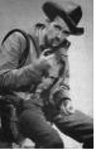 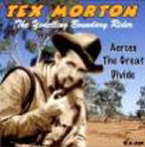 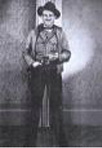 Robert 'Tex' Morton
|
TRANSPORT
THE IRON ROAD
William Webster Engineman William Sexsmith The First Train Popular Music Folklore Navvies Railway Hotels and Stations Class and Jumping the Rattler 1917 Railway Strike Train Names Refreshment Rooms Passenger Rules Railway Union Railway Magazine Unusual Railway History Mr Tom Cush Railway Disasters Timetables and Delays More Folklore Miscellaneous Rail Lore 150th Anniversary of Rail Songs and Poems |
website designed by Mountain Tracks © 2011