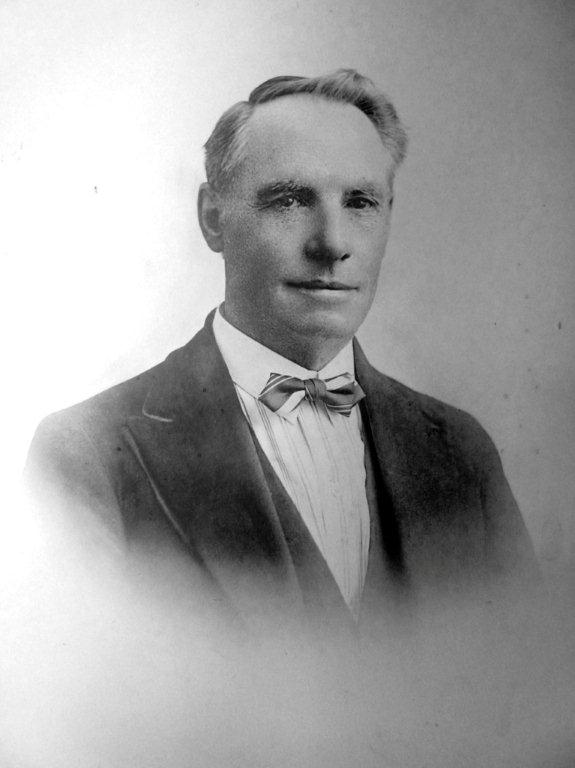
WILF CARTERTumba-Bloody-Rumba Shootin’ Kanga-Bloody-Roos© Ron and Catherine Frew - Tumbarumba Historical Society 2010 That a town is universally recognised by such an epithet is sad but that no two people, even those in Tumbarumba, can agree on the phrase’s origin is tragic. All agree it is ‘poetic’ in origin but the question; ‘Who wrote Tumba-bloody-rumba?’ causes considerable confusion. For a start there are three (at least) poems that use the phrase. Two of these are to be found in John Wolfe’s The Land of the Brolga.1 The Man from Tumbarumba is printed in two versions which Wolfe called the original and the second. The original version is described by Wolfe as being ‘first published in the Sydney Bulletin 1958 and put to music by ‘The Larrikins’.2 Warren Fahey adapted the tune of British origin and commonly known as ‘The Jack of all Trades’.3 In Bush Melodies4 by John Wolfe he renames the original version Tumba-Bloody-Rumba and includes a music score. Whether this change of name is the work of Wolfe or Fahey - or both - is a matter for the nitpickers. The words are Wolfe’s. Wolfe’s original version begins ‘He asked for work at muster time, We tried him as a rider.’ and ends with the useless braggart being shown the gate. He was last thought to be ‘Perhaps back on the lumber, Or shooting kanga-bloody-roos At Tumba-bloody-rumba.’ As a song these words are very well known and often performed by bush bands. In the second edition of The Land of the Brolga (1992) Wolfe presents the second version, still called The Man from Tumbarumba, which looks at the situation from the other perspective. It begins: ‘I took a job at muster time/ They tried me as a rider.’ The chorus contains the line ‘And chased emus and kangaroos/ At Tumba-bloody-rumba.’ In this version the experienced but shiftless farmhand ‘bogged the dray and ran away/ And took the boss’s daughter.’ Perhaps this is his view of justice for such poor treatment. John ‘Dusty’ Wolfe is not related to the Tumbarumba Wolfes, as many have suggested. John’s friend, Doug Crawford, relates that John had been with the Scottish Forestry Commission in the ‘50s, was an outback tour guide, a prolific writer of songs and poems who also played a two-row button accordion. He settled in the Moe, Mallacoota and Lakes Entrance districts of Victoria and died in 1999. The third poem and probably the one most Tumbarumba people identify as the source of the phrase in question is the one which begins: ‘I was down on Riverina, knockin’ round the towns a bit,/ An’ occasionally restin’ with a schooner in me mitt;’ The traveller is intrigued by the language as he eavesdrops on the locals in the bar. He concludes; ‘But as for me, I’m here to say, the interestin’ news/ Was “up at Tumba-bloody-rumba shootin’ kanga-bloody-roos”.’
Integrated Adjective somehow morphed into Tumba-bloody-rumba to add further to the confusion. Much of the confusion over the origin of this last poem probably stems from Tumbarumba itself. Jim Haynes in his Book of Australian Popular Rhymed Verse, (ABC Books 2001), attributes it to Will Carter. He reports to us that the information came when he phoned someone (unnamed) in the Tumbarumba Historical Society. Geoffrey Wright, Weekly Times columnist, likewise attributed it to Carter as do several Internet sites. Wright’s 1990 article that included the poem was written after his ‘recent’ visit to Tumbarumba. It is highly likely he got the same misinformation from the Tumbarumba source.5 Will Carter, (1867-1956), teacher from Middle Adelong, Courabyra, Batlow, Sutton Forest and Kurrajong North and founder of the first NSW Correspondence School, was no slouch as a poet in his own right having often been published in The Bulletin alongside the likes of Henry Lawson. He became the inaugural president of the Henry Lawson Literary Society. Being a ‘local’ he was probably a sentimental favourite. The poem is not in his papers held by the Mitchell Library6 and even his descendants do not think he could have written it. He was after all a very respected and influential school principal whose composition was often directed at young readers. Not one of Carter’s many poems comes close to using the language of Tumba-bloody-rumba. It is still unproven who first used the phrase ‘Tumba-bloody-rumba’. It almost certainly was not Will Carter. It seems though that it was most probably John Wolfe who wrote the poem, entitled by, and containing, the epithet by which we are so widely known. The story is not finished yet.
References
Post Scripts.
|
IN THIS SECTION:
WILF CARTER
OF INTEREST: You can purchase the book by mail order directly from Ron and Catherine Frew at Will Carter's manuscript collection is housed at the Mitchell Library, Sydney, MLMSS3372 |