

 |
The following description captures the ensuing grand parade:
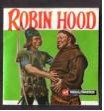
“After this personification came the Morris Dancers, six maids and six men linked hand in hand and fancifully arrayed in ribbons of red and blue, with bells on their ankles and literally covered with flowers. Then came the Maypole Dancers with hands joined, two and two. After these walked the tall and graceful maid Marion, escorted by Friar Tuck, she decorated gaily from head to foot with flowers, and he grotesquely attired in a monkish habit, and like the rest, bedecked with flowers. Then followed six pairs of Morris Dancers again, and immediately after them marched the master of ceremonies, Robin Hood (1160-1247) and by his side the Queen of May, the fairest maiden of the country side, as yet uncrowned, but attended by six young maids all dressed in white and covered with garlands.



 |
(There were many other customs connected with Mayday, and the whole affair was conducted with much mock ceremony; two girls were chosen by vote to preside over the festivities, one being called Lady Flora, queen of the flowers, and the other Lady May, but in later times only one sovereign was elected, the Queen of the May.)
Then again came the rest of the Maypole Dancers, who closed the procession, which was preceded by a band of music. After marching through the principal streets in the village, they gathered at the Maypole, and spent the remainder of the day in dancing and various games around it. The radical church was suspicious of the May ceremony and its pagan origins - "Wanton Ditties" and the pole being "a stanching Idol. They later adopted it as a ‘Mary festival.
A case of: If you can’t lick ‘em – join ‘em.
The Maypole dance today is considered a Children's dance, performed at schools, playgrounds and fairs for children with much rehearsal and choreography. Both Boys (who dance clockwise) and Girls (who dance C. Clockwise) participate.
As part of the year of Australian Federation celebration – on May 11th, 1901, The State School’s Demonstration had10,000 Victorian schoolchildren, from 57 metropolitan schools, including a choir of 5000 students dressed in red, white and blue, participating in ‘one of the most interesting fixtures of the official programme’.
Costumes added to the impact of the maypole. There were also ‘flower and Highland’ dances. The Melbourne Age called the performance “A work of art, a monument to discipline, and a living lesson as to the capacity of the ‘nation of tomorrow’.
[ next --->]
MORE ABOUT MAY:
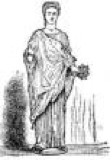
Flora - Goddess of flowers
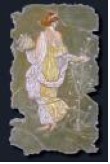
Fresco of Flora
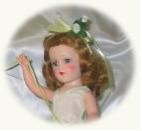
May Dolly
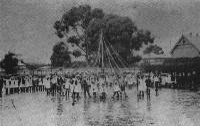
East Adelaide school maypole 1906
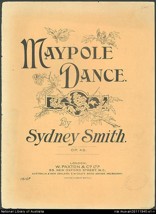
There have been many compositions
based on May and the maypole