|
|
|
|
|
THE HISTORY and FOLKLORE of HORSERACING in AUSTRALIA
|
||
|
If Australians are ‘sport’s crazy’ then the annual Melbourne Cup must be the ‘high alter’. Each year millions of dollars are ‘punted’, much of it by people who would not normally gamble on ‘the horses’, and the entire event is deeply etched into our national psyche. The historian, Russell Ward, writing in his groundbreaking book, ‘The Australian Legend’, summed it up: “The race is run over a few, short furlongs, near Melbourne. Actually, it is run across the heart of the Australian people.” The first Melbourne Cup was held in 1861, the height of the Victorian goldrushes. It attracted over 4000 spectators, an extraordinary number for the fledgling colony. Many came directly from the goldfields of Ballarat and Bendigo, their pockets swollen with gold sovereigns and tiny nuggets. There were seventeen starters racing the two-mile stretch - for the grand prize of 170 pounds and a gold-beaten gold watch. One needs to remember that watches were not that common in Australia at this stage – they only became popular later in the 19th century when Waltham and other manufacturers commenced making them at an affordable price. The ‘Cup’ replaced the watch around this time. The race was organised by the Victoria Turf Club, a breakaway from the earlier Victoria Jockey Club. The first winning horse in ‘Cup’ history was ‘Archer’. The horse had actually been walked to Melbourne from its hometown stable at Nowra, on the New South Wales south coast, a distance of some 800 km! The Melbourne Cup is fixed for the first Tuesday in November each year, usually at 3 pm AEST, when most Australians stop to watch the race. It is a public holiday in Victoria and many other Australians take the day off, or a very obvious ‘sickie’. It is held in what is referred to as ‘the peak of the Spring racing season’. The race is staged at Flemington Racecourse, named after an early butcher in that area. Today’s Melbourne Cup is a very social affair with competition for the most outrageous costume, especially men’s and woman’s hats. There is also a serious ‘social’ side with ‘Fashion in the Field’ contests. Major companies also lease space to erect hospitality tents where they wine and dine their guests. These tents are based on a ‘Siberia’ principle, the closer the track, the higher the status. Some guests receive multiple invitations and literally roll from one tent to another. Companies like Seven Network, PBL, Emirates, Nokia and Champagne House, Moet & Chandon, host tents on a regular basis. Oak’s Day, also called ‘Ladies Day’, is held in conjunction with ‘Cup Week’, on the preceding Saturday. I have found several songs about the Melbourne Cup including this gem from the Australian Melodist, published in Melbourne by Massina & Co. SOURCE: Australian Melodist No 20
Mark Twain, the great American writer and possibly the best-known humorist of the 19th century, visited Australia and went to the Melbourne Cup in 1895, observing: “Nowhere in the world have I encountered a festival of people that has such a magnificent appeal to the whole nation. The Cup astonishes me.” Winning the Melbourne Cup automatically stamps the horse, rider and of late, owner, a place in racing history. It typifies the ‘cult of celebrity’. That said, champion and duffer alike have won the Cup and some of our most celebrated horses made their popular names as winners, particularly Carbine, Bernborough, Tulloch, Phar Lap and Gunsynd. To appreciate Australia’s fervor for horse racing spectaculars one must consider the role of the horse in Australian history. In such an expansive landmass, and a 19th century economy reliant on rural endeavors, particularly sheep and cattle farming, the horse was indispensable. We relied on the horse for transport, work skill and mateship. The first horses were imported with the First Fleet and must have appeared extremely daunting to the indigenous population. The penal settlement of Botany Bay used the horse for hard labour but especially to carry the cavalry soldiers to ‘far-flung settlements’ such as Parramatta. The military also used the horses for gambling and Sydney’s famous Hyde Park started life in as a stable and in 1819 as a racetrack! SYDNEY RACES Sydney toast 1819 at old Sydney racecourse (now Hyde Park) 1819. The race was won by Rob Roy. Pledge from the Cup this first Australian prize Here’s another racing song from the early colonial period. I found this in the Mitchell Library (Dixon 86/1) and published in the Colonial Society Magazine (1868/9). Some of the references point to the horse-mounted Regiment ‘Hasses’ of the Scottish Volunteers.
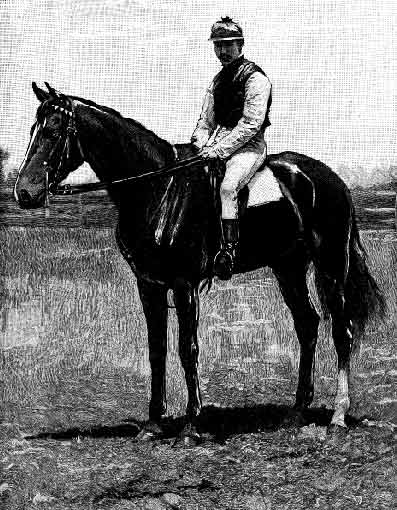
THE SYDNEY RACES (Tune: Limerick Races) In the streets of London town, as one takes a quiet tiring, Frantic chorus—Tooral looral, haw he haw! See Scottish Volunteers, dressed up in kilts and trew sirs, Chorus Old Bailey has a Bishop who, to clutch some loaves and fishes, chorus Then take the noble Sydney swells, who tailor's bills delight in, chorus A scriptural burlesque drew people nightly flocking: We've a neat brigade of Blues; if they hear a row or noise , sirs, chorus Our mob of great unpaid who haunt the Courts each morning, chorus There's the legal satellites who round the Police Court flock, fin, chorus We've a famous Lower House, filled with M.L.A.'s who din it Images of the role of the horse are familiar to all Australians – including bolting bushrangers on rearing horses; Cobb & Co coaches like the mighty ‘Leviathan’ which boasted 22 horses; horse-drawn wagons headed for the goldfields; young children clip clopping to school on huge steeds; determined yet gentle draft-horses dragging ploughs over stubble fields, and paintings like Tom Robbin’s ‘Bail Up’ canvas with its alarmed horses curiously observing the shenanigans. It was ‘Carbine’ who really changed the fame of the Melbourne Cup by bringing the race to a national and international attention. In some ways it was also ‘Carbine’ who provided the yardstick that measured subsequent horses, including Phar Lap. This outstanding bay mare started 43 times for 33 wins, six seconds and three thirds -- running out of a place only once in his career. ‘Carbine’, a New Zealand thoroughbred, holds the record for the most amount of weight carried to victory – 10 stone 5 pounds (66 kg), beating a field of 39 starters in the 1890 Cup, and setting a new race record time. He carried 53 lb (24 kg) more than the second placed horse, Highborn. Jockey Bob Ramage rode him. The remarkable win surprised the industry and public and was celebrated in song and poetry, most notable ‘When Carbine Won The Cup’. Carbine died June 10th 1914. ‘Phar Lap’, a direct descendant of Carbine, was another horse that entered our folklore. This giant of a horse started 51 times for 37 wins, three seconds, and two thirds, and was the third highest stake-winner in the world at the time of his death, winning $66,738, the bulk of it in a short two-and-a-half years. The Sydney jockey J.E. Pike won 27 races on ‘Phar Lap’. The main folklore surrounding Phar Lap is connected with his death in America, on April 5, 1932, after his stunning win in San Francisco at Agua Caliente (film of this race and additional Phar Lap history is available at the Museum of Victoria site (www.museum.vic.gov.au). Like boxer Les Darcy, who also died in America’, he participates in conspiracy theories, mostly connected with poisoning. Some say both Darcy and Phar Lap died of ‘broken hearts’. In Phar Lap’s case the fact that two USA autopsies failed to clearly identify the cause of death added to these suspicions. The feeling was that Phar Lap had flown too high and that 'the Americans' had sought to cut him down is an example of our ‘tall poppies’ mythology. As a post-script: in 2000, equine specialists examined the two autopsy reports. They concluded that Phar Lap probably died of an acute enteric disease of bacterial origin from eating lead-arsenic sprayed foliage or damp feed. It was not until the 1980s that the infection was formally identified, as diagnosis in the 1930s would not have been possible. Not only is the Melbourne Cup considered one of the world's most challenging horse races, it is also one of the richest with total prize money for 2005 hitting $AU5.1 million. It is now the richest handicap in the world, worth some $4 million and attracts around 100,000 people to Flemington, with an increasingly popular international appeal since the win of Irish-trained Vintage Crop in 1993, with winners automatically becoming part of Australian racing history. The other major ‘Cup’ is the Caulfield Cup, also staged in Melbourne. The first Caulfield Cup was run in 1879 and the first horse to win was Newminster. The Caulfield Cup, a group one race, is one of Australia's toughest handicap races. It is run over 2400 meters and is an important lead-up to the Melbourne Cup. The race prize money is worth over 2 million dollars. The Caulfield Cup is also associated with folklore and, in particular, the death of famed jockey Alec Robertson, in the 1890s. I recorded the following song off Cyril Duncan, Hawthorn, Brisbane, in 1973. THE DEATH OF ALEC ROBERTSON Go tell my dear old mother, My head does pain, my side does ache, But late that night she got a fright, It was the railing horse that came down first, The doom was caused by Vespier Go tell my dear old mother, I feel myself insane If God would spare me just to see My dear Mother once again. Now Mabber's rider's gone for all Tommy Corrigan, and Irish-born jockey, is also associated with song and poetry. He was an outstanding rider and met a tragic death in a horrific steeplechase accident in 1894. I had the following song from the singing of Joe Watson, Caringbah, NSW, in 1974. Joe had learnt the song from a schoolmaster who had been a friend of Corrigan.
DEATH OF TOMMY CORRIGAN (Tune: Wearing Of The Green) Come friends just listen to me, and a story I will tell, He was fast approaching Dondi, as they rounded at the turn. I'm sorry that I let him ride, good Mr Vargo said, So if you always loved him, and followed him through life, His death was commemorated by none other than A B Paterson in his poem: TOMMY CORRIGAN You talk of riders on the flat, of nerve and pluck and pace— When every jump means all you know to keep him on his feet. He gave the shirkers extra heart, he steadied down the rash, They were, indeed, a glorious pair—the great upstanding horse, But now we’ll keep his memory green while horsemen come and go; There have been many popular songs composed and popularized about horses and horse racing including The Goondiwindi Grey (about Gunsynd), Mandrake (about Tex Morton’s buck jumping show horse), Bridle on the Wall (old C&W favourite), Whip & The Spurs (about Lance Sculthorpe), to name just a handful. There are also many poems with Paterson’s Man From Snowy River being the most famous Australian example. Horse racing was considered a bushman’s recreation and the country race meetings were a major attraction. Shearers, drovers, squatters and just about every other type of bushman would descend on the race meetings. Many the season’s cheque jumped into the bookie’s bag. The best example of the bushman at the races is the song ‘The Big Gun Shearer’ where he sings: He shouts for everyone ‘round the place, When his money’s gone and he’s sick and sore, There’s a tale of Fred Ward, aka ‘Thunderbolt the bushranger’, ‘bailing up’ a coach of German musicians in the New England region of NSW, and sympathizing with them that they were “only poor musicians” – but he wanted money for the Tamworth Races. He took their money but, according to legend, told them he would return it if he won at the races! Apparently he backed the winner and left their money at the post office for collection. When I recorded Joe Watson is the early nineteen seventies he told be about a race at Booroowa where there were only two jockeys – a real two-horse race – and both of them had been instructed to win. Apparently the horses and riders left the starting post and disappeared around the bend but didn’t reappear. Officials marched to the bend and found them both, dismounted, arguing, as neither wanted to win! Around the time of Federation city race meetings had become extremely fashionable. They were an opportunity for city people to dress up in their finest and, like the horses they so much admired, strut about the field. Betting was also seen as a working class ‘sport’ and there were several dedicated newspapers such as ‘Sporting Life’. Newspapers were also carrying horse news and weekly race results. It is probably no surprise that Tattersall’s of Melbourne was the world’s first automated tote system. Considering the number of illegal ‘SP’ bookies operating in the first half of the 20th century it was probably a good move. Horse racing has also entered into our vocabulary, especially our colloquial ‘slanguage’ – “the horse ran so wide it knocked a pie out of the mouth of a punter in the grandstand”. Gamblers are ‘punters’ or ‘betters’, people who scour the racetrack grounds for possible winning tickets are said to be “emus”, and so on. There is also quite a lot of rhyming slang used in association with the ‘sport of kings’ eg ‘hickey-hockey’ for jockey, ‘pie and sauce’ for horse. Superstitions, especially good luck charms are also widespread in the racing fraternity. Punters will wear their ‘lucky tie, suit or hat, carry a good luck charm like a bracelet, gem, marble etc. Sometimes these are associated with a lucky ‘colour’ – usually based on a past win whilst wearing that particular item or colour.
|